

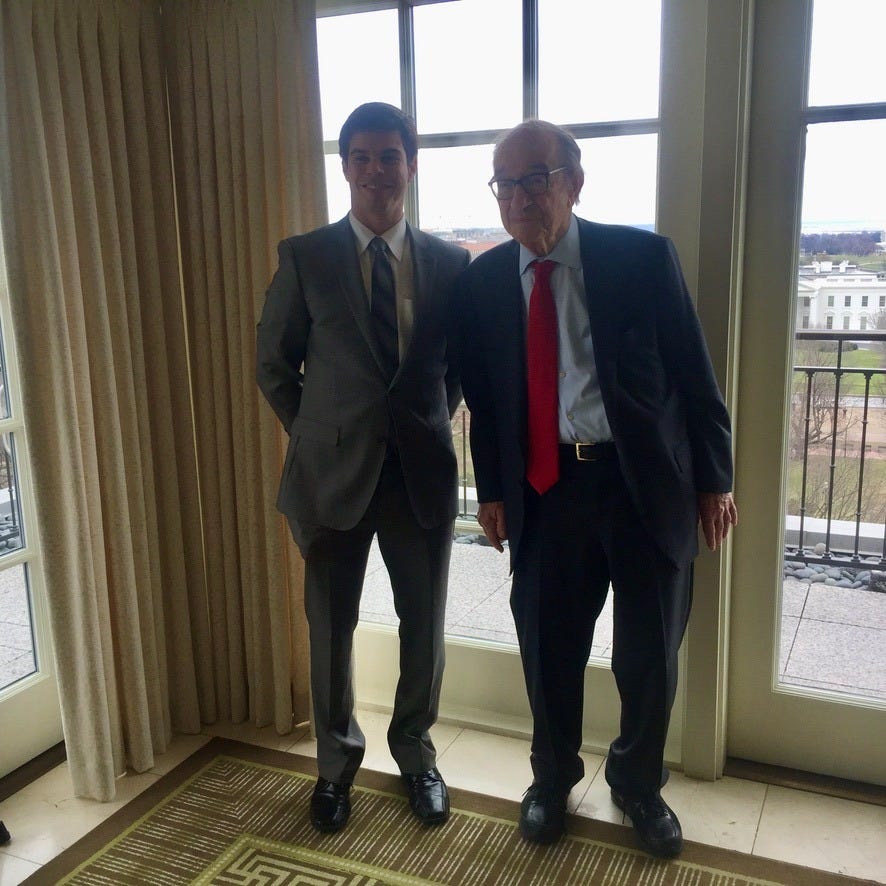
This week, the world lost a giant of economics.
As a young man, I had the extraordinary privilege of working directly for Dr. Alan Greenspan for nearly two years. Rather than write about his career, his legacy, or, quite frankly, his genius, I thought I’d simply share a few stories from our time together and the lessons they left with me.
Frequent readers of this Substack may know that I worked for Dr. Greenspan, but few know how I came to have the job.
Like many aspiring economists, I admired him from afar. One afternoon, while he was delivering a speech at the Brookings Institution, I waited in line afterward with a worn copy of The Age of Turbulence, hoping to have it signed. His Chief of Staff couldn’t arrange the signing that afternoon, but took my information.
A few weeks later, I arrived at his office carrying that same book. I assumed I would leave it with the receptionist for an autograph.
Before I could even introduce myself, the office doors opened.
Out walked Dr. Greenspan.
What I expected to be a thirty-second exchange became an hour-long conversation. We talked not about the econometric models or the Federal Reserve, but about what I considered one of the greatest accomplishments of his career: engineering the soft landing of 1994. I had studied that episode extensively and peppered him with questions about monetary policy, inflation expectations, and the delicate balance between acting too early and too late.
About a week later, my phone rang.
It was his Head of Research.
“Dr. Greenspan would like to know if you’d be interested in joining him as his research assistant.”
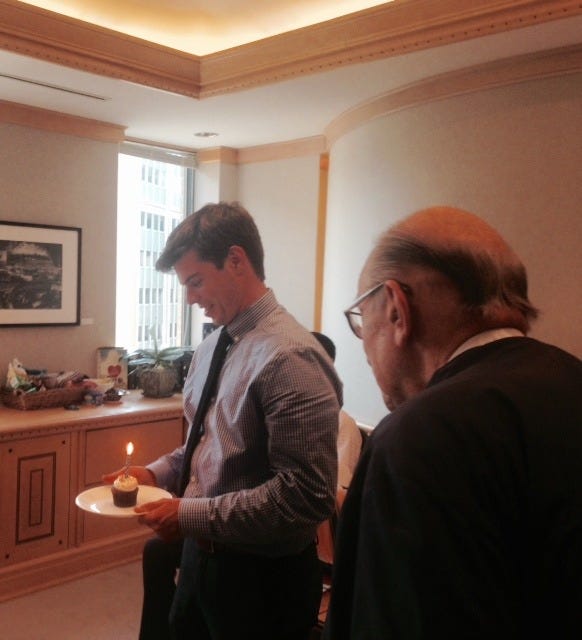
It remains one of the most unexpected and consequential phone calls of my life.
More important than how I was fortunate enough to land the job, however, was what I learned from him.
Search for today’s economy, not yesterday’s
Dr. Greenspan had enormous respect for official statistics, but he also understood their limitations. By the time GDP, employment, or inflation figures reached policymakers, the economy had often already changed.
He was constantly searching for signals that could tell him what was happening now, not what had happened three months ago.
That philosophy left an indelible mark on me.
Years later, it became the intellectual foundation for Atlas Analytics. Our work using satellite imagery to estimate GDP is, in many ways, an attempt to answer the same question he asked every day:
“What is the economy telling us today?”
Hold your convictions with humility
Despite being one of the most influential economists in history, Dr. Greenspan never pretended the economy could be known with certainty.
He held strong views, but lightly.
He understood that forecasting was not about proving yourself right. It was about continuously updating your beliefs as new information emerged.
Economics often rewards confidence.
Reality rewards intellectual honesty.
Never lose your sense of humor
The public knew Alan Greenspan as the famously reserved Chairman of the Federal Reserve.
I came to know someone with an unexpectedly dry wit.
One afternoon, while we were working on a research project together, I told him I’d make sure everything was “spick and span.”
Without looking up from his papers, he smiled and replied,
“I’m Greenspan. I’ll handle the span—you handle the first part.”
It was classic Greenspan: understated, clever, and perfectly timed.
On another occasion, during a trip to New York, the hotel pastry chef surprised Dr. Greenspan with an elaborate Star Wars-themed chocolate sculpture depicting him as Luke Skywalker. He admired it for a few moments, laughed, and then handed it to me.
That was him.
He never seemed particularly interested in the attention that came with being Alan Greenspan. To him, it was just chocolate.
When people think of Dr. Greenspan, they think of interest rates, inflation, and monetary policy.
I think of the young economist who nervously walked into an office carrying a book for an autograph and walked out with a mentor.
I think of the man who challenged me to look beyond the data everyone else was looking at.
I think of his quiet generosity, his relentless curiosity, and his wonderfully understated sense of humor.
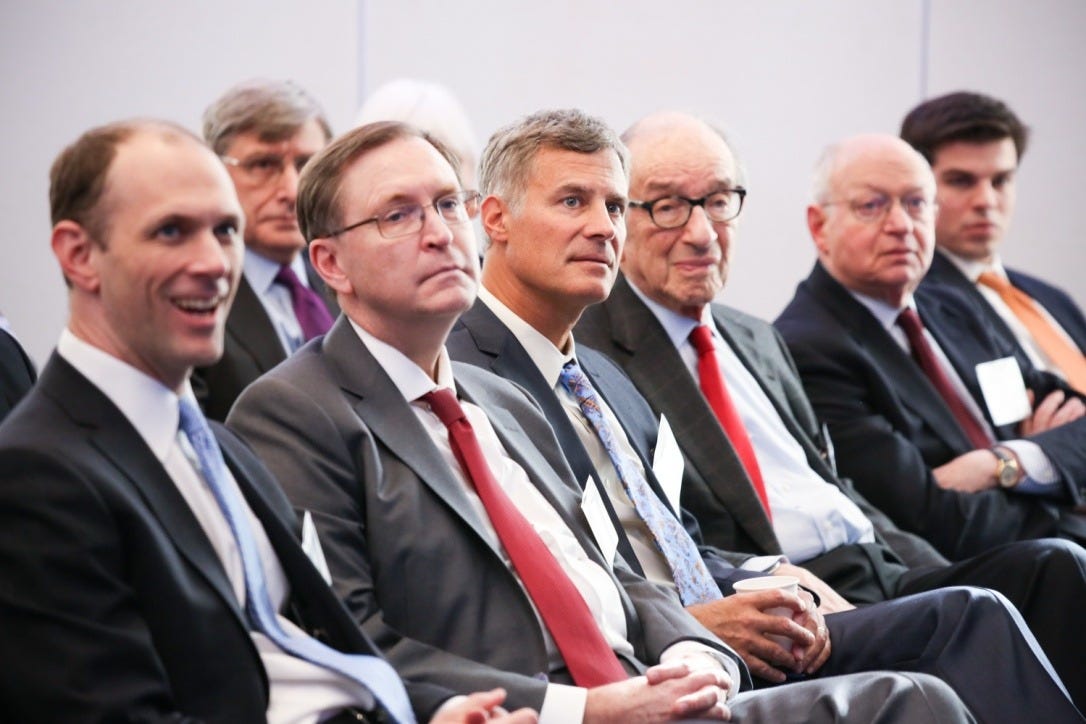
Dr. Greenspan was a brilliant economist, but he was much more than that.
He represented an ideal that feels increasingly rare: intellectual curiosity, humility before uncertainty, respect for evidence, and a lifelong commitment to public service.
History will remember the Chairman.
I’ll remember Dr. Greenspan.
Rest in peace, Mr. Chairman.
Beautifully written.