

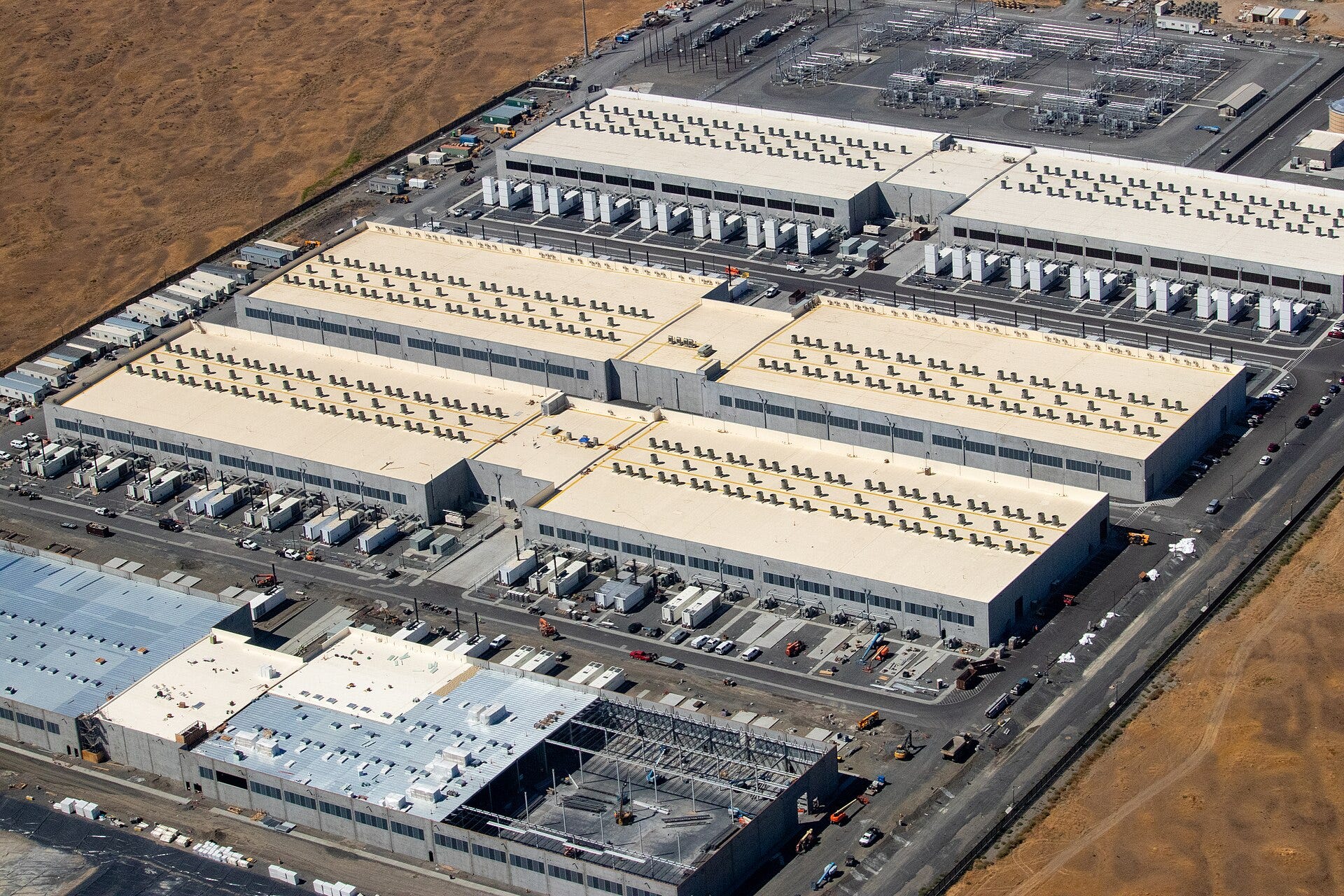

Over the past several years, the AI investment story has largely centered on chips, models, and technology stocks. Today, the scale of the AI buildout is shifting attention toward the physical infrastructure required to support and power it.
Hundreds of billions of dollars are flowing into data center buildouts, land acquisition, servers, power generation, transmission, cooling systems, legal, and construction. As that capital moves into the physical economy, AI is beginning to reshape not only technology markets, but energy demand, infrastructure development, and regional economies across the United States.
The gap between what is announced and what is actually built may therefore become an increasingly important signal for understanding the next phase of AI investment.
Follow the Capital
The spending numbers alone illustrate how quickly the AI economy is changing.
Amazon increased its expected 2026 capital spending to approximately $220 billion following strong second-quarter cloud growth. AWS revenue increased 37% year over year, its fastest growth in more than four years, even as Amazon said demand continued to exceed available computing capacity.
Microsoft expects to invest roughly $190 billion in capital expenditures during calendar year 2026. The company has said that much of its recent spending is going toward GPUs, CPUs, and long-lived assets such as large data center sites. Microsoft also expects to remain capacity constrained as it continues expanding AI infrastructure.
Alphabet has guided toward $175 billion to $185 billion of 2026 capital expenditures, primarily to expand AI computing capacity and meet growing Google Cloud demand.
Meta expects another $130 billion to $145 billion of capital expenditures in 2026. In the second quarter alone, Meta spent approximately $31 billion, nearly double the level of the same quarter a year earlier.
Taken together, these four companies alone are planning more than $700 billion of capital spending in 2026, with AI and cloud infrastructure among the major drivers.
That is no longer simply a technology investment cycle.
It is becoming one of the largest physical capital deployment cycles in the U.S. economy.
The Investment Is Showing Up on the Ground
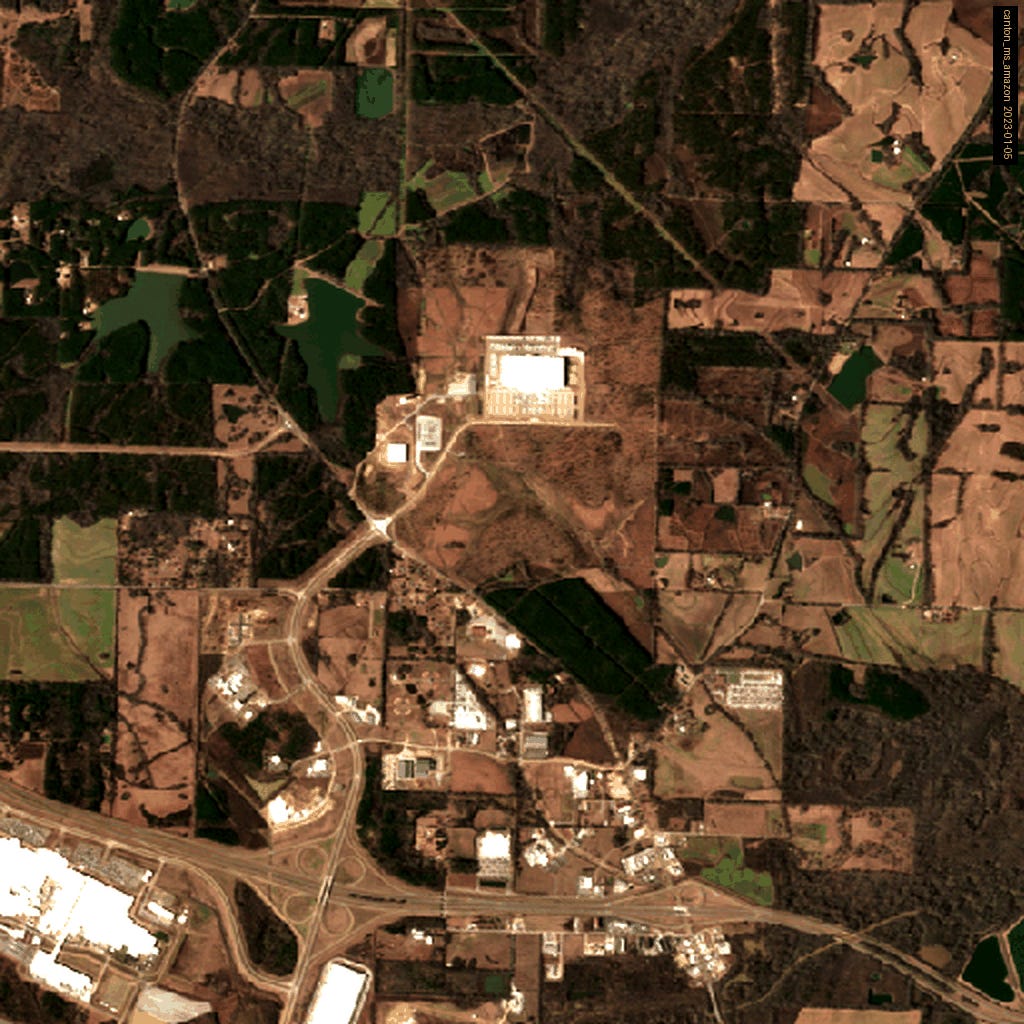
Recent announcements make the scale even more tangible.
In Kentucky, NextEra Energy announced plans for a more than $100 billion privately funded development at the U.S. Department of Energy’s Paducah Site in Kentucky.
Kentucky is not an isolated case.
In Ohio, Nvidia has agreed to provide guarantees of up to $105 billion supporting OpenAI’s long-term lease of a data center development that could ultimately reach 8 gigawatts of capacity. The project’s first 800 megawatts are expected online in 2028.
In West Virginia, Anthropic is expected to commit $45 billion over six years to rent computing capacity from an Nscale data center, representing roughly 460 megawatts of capacity.
In Texas, Meta is also bringing outside infrastructure capital into the buildout. In July, the company announced a partnership with BlackRock to finance a roughly $14 billion data center campus. Funds managed by BlackRock will own 80% of the venture, with Meta retaining 20%.
These projects represent different types of financial commitments, but together they point to the same structural shift. AI investment is becoming geographically specific, asset intensive, and increasingly dependent on physical infrastructure.
Corporate Balance Sheets to Capital Markets
The financing is changing too.
For much of the AI boom, the largest technology companies could finance infrastructure largely from their enormous operating cash flows.As investment requirements have grown, outside capital and debt markets have become increasingly important.
According to Reuters, U.S. corporate debt issuance associated with AI infrastructure reached approximately $220 billion in 2026, compared with just $12.5 billion the previous year.
Private capital is moving in as well.
This matters because the AI buildout is beginning to resemble other major infrastructure cycles. As the sector becomes more capital intensive, the relationship between capital committed and productive infrastructure delivered will matter more.
The Tale of Two Buildouts
This creates a useful distinction for investors.
There is the announced AI buildout. It consists of capital expenditure guidance, financing commitments, data center announcements, power agreements, equipment orders, and projected capacity.
Then there is the physical AI buildout. Land gets cleared. Foundations appear. Buildings go vertical. Cooling systems and electrical infrastructure are installed. New generation comes online. Facilities expand, become operational, or encounter delays.
Over time, the two should converge.
If capital in planned investment translate into completed assets with strong utilization and attractive returns, the physical economy will provide evidence that the infrastructure cycle is delivering on its promise.
If deployment begins slowing, construction timelines slip, facilities remain underutilized, or announced capacity repeatedly fails to materialize, the physical economy may provide an early indication that expectations have moved ahead of reality.
That makes physical deployment an increasingly important piece of the AI investment puzzle.
Measuring What Actually Gets Built
At Atlas Analytics, our technology is designed to measure economic activity through changes that can be observed in the physical world.
Using satellite imagery, computer vision, AI/ML, and time-series analysis, Atlas can monitor activity across individual locations and assets over time.
For the AI infrastructure cycle, that creates an opportunity to track activity around specific data centers, construction projects, energy infrastructure, industrial facilities, and other economically significant assets.
Financial markets provide one view of the AI boom. Corporate announcements provide another.
Physical activity provides an independent layer of evidence.
As AI investment becomes increasingly tied to land, energy, construction, and individual facilities, understanding what is actually happening at those locations can help distinguish between capital announced and capital deployed.
The AI boom is increasingly leaving a physical footprint across the United States.
And that footprint can be measured.
Jake Schneider, another well written article which opens discussion to many areas. Will AI development be a boom or a bust for our society? The big money feels it is a necessary progression. What does AA think?